
Treating adult ADHD from the inside out
What Is ADHD — Really?

Secondly, people with ADHD not only don’t always exhibit hyperactivity; many were never hyperactive their entire lives.
So what in the world is ADHD?
Essentially, it’s a deficit in the brain’s ability to easily, naturally and subconsciously direct, regulate, control and prioritize attention.

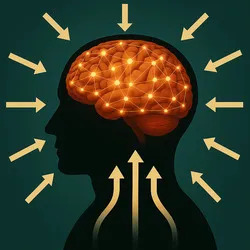
From all of this information, your brain is constantly comparing and carefully calibrating how important each bit of information is, how much of your conscious mind it deserves to get, and whether it’s important to remember. Most of this work is done totally without you thinking about it. And that’s a very good thing! If you had to think consciously all the time about what you need to pay attention to, the way you did when you first learned to drive, you’d be too exhausted to live.
If you’re a “neurotypical” person whose “executive assistant” is working properly, it makes you feel, for example, long ahead of time, when you are starting to run late to catch a plane — and you speed up your day accordingly. It makes you notice and get energized when your boss mentions in passing that he or she needs something done by tomorrow. Your focus naturally shifts. What you were doing up until then starts to feel less interesting, or at least less compelling, while the things you need to do for your boss become more so.
In people with ADHD, however, this inner executive secretary or assistant is off-kilter. If you have ADHD, rather than consider all sorts of subtle factors (like the departure time of your flight, the distance from the airport, likely traffic, and the look on your boss’s face), your executive assistant tends to automatically assume that the most important information is coming from the strongest stimuli. So whatever’s loud, close, new and novel, urgent or intrinsically interesting automatically gets almost all of the attention. If there’s nothing loud, close, novel, urgent or intrinsically interesting, it’s hard for the secretary to kick in and do its job.
What’s more, in people with ADHD, their brain and central nervous system don’t filter out signals coming from within the body to the same degree, so inner thoughts, feelings and impulses come through “louder” and more insistently than they do for other people — making it hard to hear and discern subtle signals from others.
For those with the Inattentive subtype, the “loudest” internal signals appear to be the ones that monitor and interpret the body’s internal state. This is the amazing network of inner senses that originate in our internal organs and processed within the brain known as interoception.
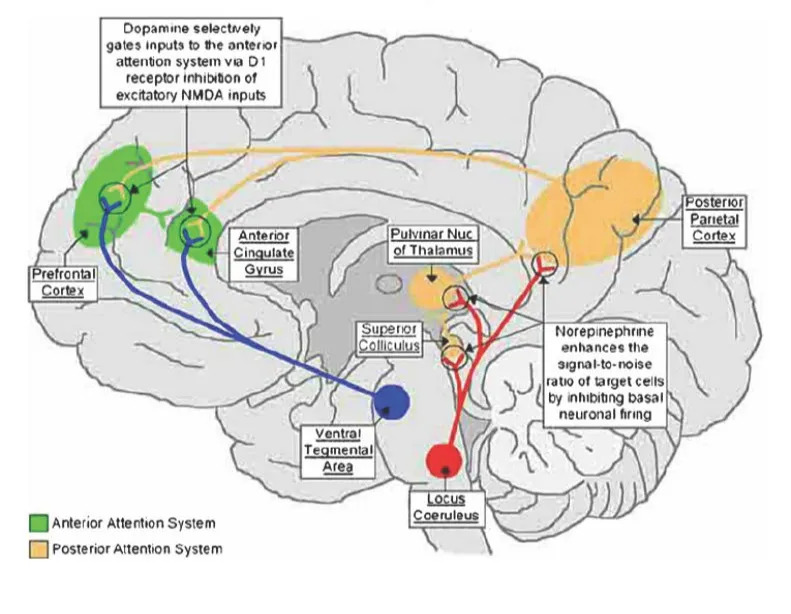
The human brain is designed to automatically and instantaneously combine the information we receive from our internal and external senses. But for children and adults with Inattentive ADHD, the setting between the two may be a little “off.” They can’t filter out the constant train of thoughts and feelings coming from within. As children they’re usually daydreamy, often out of touch with the outside world as they pay attention to the drummer in their minds.
Contrary to what was previously believed, very few people “grow out” of ADHD. In adults, these differences throw all sorts of systems out of whack. Like a virus in an otherwise powerful computer, ADHD creates weird, seemingly inexplicable difficulties in otherwise intelligent and sane people, and generally gums up the works to make ADD’ers work harder than other equally intelligent people to succeed at life.
(If you want to read more about how Adult ADHD affects people, read “Seven Common Signs of Adult ADHD“)